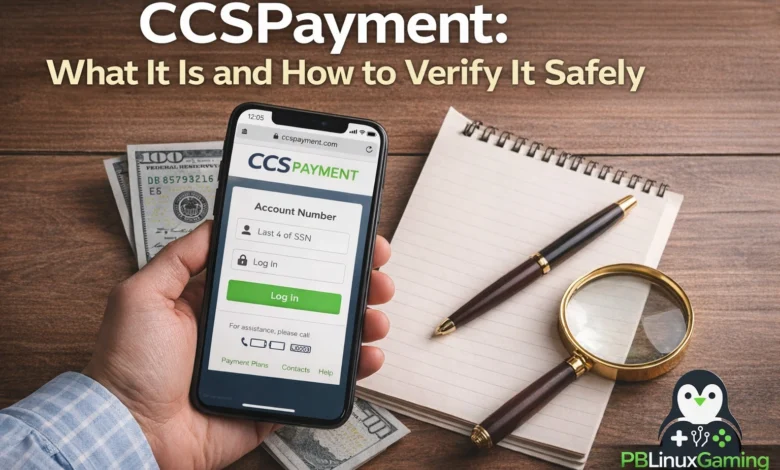
CCSPayment is commonly associated with the payment portal used by Credit Collection Services, often called CCS. Official CCS materials show a consumer payment portal and describe services such as payment processing, payment plans, payment history review, and document submission. Current search results also show that many users look up this term because they want to know whether CCSPayment is real, why they were contacted, and how to avoid fake collection notices.
What Is CCSPayment?
CCSPayment is not a separate, well-known consumer brand in the same way as a bank or lender. In current search results, it appears as the online payment portal tied to Credit Collection Services. CCS describes itself as a major collection firm, and its payment portal snippet lists options such as paying by check or credit card, setting up a payment plan, reviewing payment history, and sending correspondence.
That matters because many people search for “ccspayment” after getting a call, letter, email, or text about a debt. In practice, the search intent is usually one of these:
- Is CCSPayment legitimate?
- Why is CCSPayment contacting me?
- Is this debt real?
- How do I verify the account before paying?
- What are the warning signs of a fake debt collector?
Why Someone Might Hear From CCSPayment
According to the CFPB, a debt collector may contact you because a creditor believes you are past due on a debt. The CFPB also explains that debt collection rules require collectors to provide certain information so you can identify the debt and decide whether it is yours.
In other words, a CCSPayment notice usually points to a collection effort connected to an unpaid account. That does not automatically mean the debt is invalid or valid. It means the debt should be verified before any payment is made. Federal consumer guidance is clear on that point.
Is CCSPayment Legit?
Search results and official CCS listings indicate that CCSPayment is linked to a real debt collection business, Credit Collection Services. CCS has an official company site, and the portal shown in search results appears under the CCS domain structure. Third-party security roundups published in 2025 also describe CCSPayment as a legitimate CCS payment portal.
However, that does not mean every message using the CCSPayment name is trustworthy. The FTC and OCC both warn that scammers often impersonate real debt collectors to pressure people into paying fake debts or giving away personal information. That is why legitimacy depends on the specific communication, not just the name used in it.
What Information a Real Debt Collector Must Give You
The CFPB says debt collectors must provide validation information about the debt, generally in the initial communication or within five days of the first contact. That information helps you determine whether the debt is actually yours.
Required debt validation information
According to the CFPB, a validation notice generally must include:
- A statement that the communication is from a debt collector
- Your name and mailing information
- The debt collector’s name and mailing information
- The name of the creditor
- The account number, if any
- An itemization of the amount owed, including interest, fees, payments, and credits
- The current amount of the debt
- Information on how to dispute the debt
- A deadline for the 30-day dispute period
The CFPB also explains that if you send a written dispute or request for verification within that 30-day period, the collector must pause collection of the disputed amount until it responds adequately.
How to Tell Whether a CCSPayment Notice Is Real
A real debt collector and a fake one can look similar at first. That is why federal guidance focuses on verification, not guesswork.
Signs the contact may be legitimate
A communication is more credible when it includes proper validation details, identifies the creditor, states the balance clearly, and gives you a way to dispute the debt within the required period. Those are the kinds of disclosures federal rules require.
Red flags that point to a scam
The FTC says a caller may be fake if they:
- Demand payment for a debt you do not recognize
- Refuse to provide a mailing address or phone number
- Pressure or threaten you
- Claim you will be arrested
- Pretend to be from the government or law enforcement
The OCC adds more warning signs, including:
- Threats of arrest, lawsuits, or wage garnishment unless you pay immediately
- Refusal to provide written verification
- Demands for payment through wire transfers, prepaid cards, or gift cards
- Requests for sensitive personal information during an unsolicited contact
What To Do Before Paying CCSPayment
If you receive a notice tied to CCSPayment, the safest next step is verification.
1. Review the validation notice carefully
Check the creditor name, account details, itemized balance, and dispute instructions. These are core pieces of information required under debt collection rules.
2. Compare the debt with your own records
Look at past bills, account statements, insurance explanations of benefits, toll notices, or loan records. The FTC advises confirming whether the debt is actually yours before paying.
3. Dispute it in writing if anything looks wrong
The CFPB says you generally have 30 days to dispute the debt in writing after receiving validation information. If you dispute it in time, the collector must pause collection of the amount you dispute until it verifies the debt.
4. Do not react to threats
The FTC says threats of arrest, violence, or fake legal action are major warning signs. A legitimate collector cannot use those tactics.
5. Avoid sending sensitive information too quickly
The OCC warns consumers not to share details such as bank information or Social Security numbers during unsolicited contacts until the debt has been verified.
Read must: Ivan Cornejo Height: What’s Publicly Reported?
Consumer Rights Related to CCSPayment and Debt Collection
The CFPB states that the Debt Collection Rule, effective November 30, 2021, clarifies how collectors can communicate and what they must tell consumers. It also notes that the FDCPA limits unfair practices.
The FTC adds that collectors cannot harass you, threaten to hurt you, use obscene language, lie about the amount you owe, pretend to be attorneys or government officials, or keep calling in ways that violate the law.
These protections matter because confusion around CCSPayment is often less about the portal itself and more about whether the person contacting you is following the law.
Common Reasons CCSPayment Gets Searched Online
Based on current search results, the term “ccspayment” is often searched for these reasons:
- A text or email mentions a balance due
- A user does not recognize the creditor name
- The payment portal name appears unfamiliar
- People want to know whether it is a scam
- Users want steps to verify a collection notice safely
This means an effective article on ccspayment needs to do more than say “yes” or “no.” It should explain what the portal is, how debt validation works, what rights consumers have, and which red flags matter most. Those are the gaps many thin pages miss.
Key Points About CCSPayment
- CCSPayment is associated with Credit Collection Services and appears in official CCS payment portal results.
- A real debt collector must provide validation information so you can identify and dispute the debt if needed.
- A legitimate company name can still be used in fake collection scams.
- Threats, pressure, missing written proof, and demands for unusual payment methods are major warning signs.
- If you dispute a debt in writing within the allowed period, collection on the disputed amount generally must pause until verification is provided.
FAQs
Is CCSPayment a scam?
Not by itself. Current results indicate that CCSPayment is tied to a legitimate CCS payment portal. But scammers can impersonate real collection companies, so any specific message still needs to be verified.
What should a CCSPayment letter or notice include?
The CFPB says a debt validation notice generally should include the collector’s identity, creditor name, account details, itemized balance, current amount due, dispute instructions, and the 30-day dispute deadline.
Can a debt collector demand immediate payment?
Collectors can request payment, but threats, harassment, false claims, and pressure tactics are not allowed. The FTC and OCC both warn that urgent threats are a common scam signal.
What if I do not recognize the debt?
Ask for validation information and dispute the debt in writing if needed. The FTC says not to pay a debt you do not recognize until it has been verified.
Where can consumers report suspicious debt collection activity?
Federal guidance points consumers to the FTC and CFPB complaint channels, and the OCC also notes state attorneys general and local law enforcement as reporting options in scam cases.
Final Thoughts
CCSPayment is best understood as a debt-collection payment portal connected to Credit Collection Services, not as a mystery brand on its own. The real issue for most users is verification. Federal consumer guidance is consistent: confirm the debt, review the validation notice, know your dispute rights, and treat threats or unusual payment demands as warning signs. That approach protects you whether the contact is legitimate, mistaken, or fraudulent.